Buying an industrial mixer isn’t just a purchasing decision. It’s a process decision. The right mixing equipment improves consistency, reduces downtime, and supports long-term production goals. The wrong choice can create bottlenecks, maintenance headaches, and inconsistent product quality.
Before investing in a new system, use this checklist to evaluate what your business truly needs.
1. What Material Are You Mixing?
Start with the basics:
- Is it liquid, solid, or a combination?
- What is the viscosity range?
- Does the material require shear for proper dispersion?
- Are there abrasive or corrosive components?
Applications involving coatings, adhesives, or composites may require high-shear dispersers, while blending liquids may call for a properly configured agitator mixer or slow-speed mixer. Material properties directly influence motor size, shaft design, and mixing impeller selection.
2. What Level of Shear Is Required?
Not all mixing is created equal.
If your process requires particle breakdown or uniform dispersion, you may need an industrial disperser designed for higher speeds. For gentle blending or maintaining suspension, a lower-speed configuration may be more appropriate.
Understanding shear requirements early prevents over- or under-specifying your equipment.
3. What Batch Size and Tank Configuration Do You Need?
Are you producing small specialty batches or operating at large-scale production volumes? Your industrial mixer must be properly matched to tank volume, geometry, and structural requirements to ensure consistent performance.
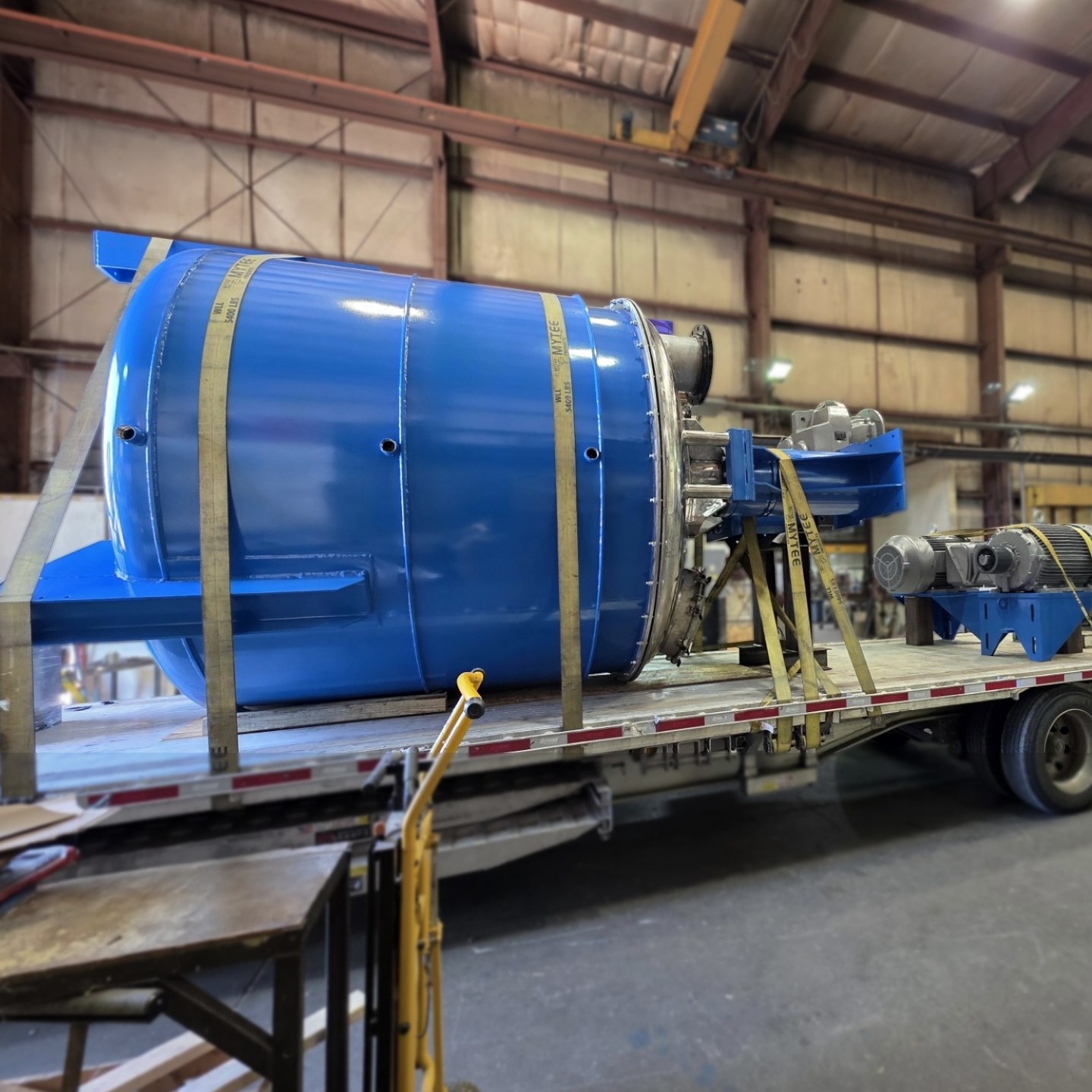
In many cases, a custom tank solution designed alongside your industrial mixer delivers better results than pairing standard components. When the tank and mixer are engineered together, you improve efficiency, reduce strain on equipment, and create a more reliable mixing system.
The mixer and tank should operate as a unified system, not as separate pieces assembled after the fact.
4. Is a Standard Mixer Enough — or Do You Need Custom?
Off-the-shelf equipment can work for straightforward applications. But many operations benefit from custom mixers built around their specific process.
A customized mixing solution allows for:
- Precise speed control
- Specialized impeller configurations
- Mounting flexibility
- Integration with an automated batching system
A qualified mixer manufacturer should evaluate your full process, not just the motor horsepower.
5. How Will the Mixer Integrate Into Your Existing System?
A mixer rarely operates alone.
Consider:
- Electrical requirements
- Control systems compatibility
- Safety features and interlocks
- Workflow integration
Your mixing system should enhance productivity, not complicate it.
6. What Are Your Long-Term Durability Expectations?
Industrial equipment is an investment. Look for:
- Proven quality and durability
- Heavy-duty shaft construction
- Reliable drive systems
- Serviceability and parts availability
7. Partner With a Mixer Manufacturer That Engineers for Performance
Selecting an industrial mixer is not just about horsepower or tank size. It requires engineering expertise, process evaluation, and long-term planning.
An experienced mixer manufacturer will evaluate your material characteristics, production goals, and facility constraints before recommending equipment. From high-performance mixers and custom dispersers to fully integrated custom tank solutions, every component should be engineered to function as part of a complete mixing system.
The right partner ensures your industrial mixing equipment supports efficiency, scalability, and long-term durability from day one.